Friday, February 3, 2012

OUTSIDE

AMU Gallery in Prague http://www.gamu.cz/
invite you to the exhibition of the FAMU graduates (Department of Photography)

OUTSIDE

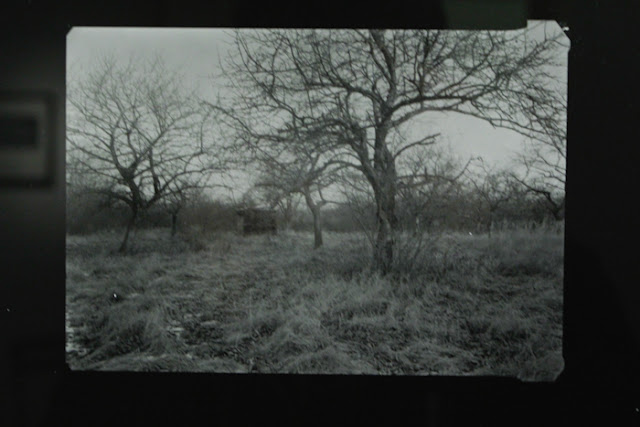
David Cysař
Radek Květoň (Andere Seite)
Tomáš Rasl
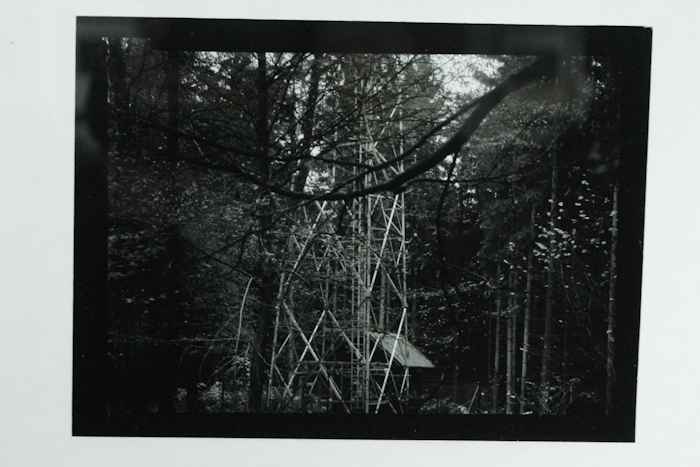
Daniela Vokounová
Petr Zinke

on Thursday, February 2nd, 2012 at 6 pm.

introduction: Josef Moucha

Galerie Akademie múzických umění v Praze
Hartigovský palác
Malostranské nám. 12, Praha 1


Friday, January 20, 2012

Eva Fukova Ru-Eng

 
Eva Fukova чешский фотограф. Родилась в 1928 году. Первые фотографии сделала в 1939 при помощи старенькой Лейки.  Осознано начала фотографировать в конце Второй мировой войны, когда немцы ушли и пришли русские. Вместе со своим мужем Vladimir Fuka входила в группу авангардистов, которая в то время сильно преследовалась коммунистическими властями.  У них даже был свой агент, который постоянно следил за ними, несмотря на то, что уже к тому времени её муж был достаточно известным в Чехословакии художником. Коммунистические власти позволяли им путешествовать за границу, поскольку Vladimir Fuka к этому времени был достаточно известен и часто издавался там, но они никогда не могли взять с собой дочь.  Все это время она оставалась заложником и гарантией того, что Eva Fukova и Vladimir Fuka не скроются от   секретной полиции тогдашнего режима.  Eva Fukova вспоминала:  «We could never take our daughter with us, and when we came back there were always questions, where we were, what did you do, why did you meet...Sometimes it was very harsh. Actually, when we first came from America they came and actually hit Vladimir, because he forgot one name and the name evidently was very important for them. » http://www.radio.cz/en/section/one-on-one/eva-fuka-part-1  Как итог, в 1967 году Eva Fukova и Vladimir Fuka приняли решение оставить Чехию и переехать в Нью-Йорк.  Многие их произведения и негативы были оставлены там и, как следствие, на всегда утеряны. Eva Fukova покинула Чехословакию, находясь на вершине своей карьеры, вместе с мужем сначала они переехали в Германию, и через 6 месяцев они переехали в США. Нью-Йорк был их первой остановкой. Как после признавалась сама Eva, там во многом она была вынуждена начать с самого начала.
Пребывание в новой для себя культуре не могло не сказаться на творчестве Евы.  Чувствуя некоторую абсурдность и экзотичность вещей, которые окружали её, Ева пыталась перенести своё мироощущение в свои работы. Большое количество рекламы На первый взгляд обычные вещи, которыми полна – большое количество рекламы и знаков, всех цветов и размеров, которыми наполнена Америка, вдохновляли и заставляли реагировать Еву в своих ранних американских фотографиях.
Сложно назвать её работы полностью документальными. Скорее это симбиоз, где в дальнейших её работах немалое влияние оказал поп-арт. Если же говорить о её ранних американских работах, то их можно охарактеризовать, как попытку уйти в некий свой собственный мир.  Безусловно, это можно охарактеризовать как поворотный момент в творчестве Евы. Большое внимание она начинает уделять деталям и обычным сценам из повседневной жизни, которыми была полна новая действительность, в которой Ева оказалась. Гладкие витрины магазинов или рабочие, завтракающие на Бруклинском мосту.

 
Eva Fukova the Czech photographer. Was born in 1928. The first photos has made in 1939 by means of an old Watering can. It is realized has started to photograph in the end of the Second World War when Germans have left and Russian have come. Together with the husband Vladimir Fuka entered into group of avant-gardists which at that time was strongly pursued by the communistic authorities. They even had an agent who constantly watched them in spite of the fact that already by then her husband was known enough artist in Czechoslovakia. The communistic authorities allowed them to travel abroad as Vladimir Fuka by this time it was known enough and was often published there, but they never could take with themselves the daughter. All this time it remained the hostage and a guarantee of that Eva Fukova and Vladimir Fuka will not disappear from confidential police of a mode of that time. Eva Fukova remembered:« We could never take our daughter with us, and when we came back there were always questions, where we were, what did you do, why did you meet... Sometimes it was very harsh. Actually, when we first came from America they came and actually hit Vladimir, because he forgot one name and the name evidently was very important for them. »<http://www.radio.cz/en/section/one-on-one/eva-fuka-part-1> As a result, in 1967 Eva Fukova and Vladimir Fuka have made decision to leave Czech and to move to New York. Their many products and negatives have been left there and, as consequence, on are always lost. Eva Fukova has left Czechoslovakia, being at top of the career, together with the husband at first they have moved to Germany, and in 6 months they have moved to the USA. New York was their first stop. As after admitted itself Eva, there in many respects it has been compelled to begin from the very beginning.
Stay in culture new to should affect Eve's creativity. Feeling some absurdity and экзотичность things which surrounded it, Eve tried to transfer the attitude to the works. An advertising considerable quantity At first sight usual things with which it is full - a considerable quantity of advertising and the signs, all colors and the sizes by which America is filled, inspired and forced to react Eve in the early American photos.
It is difficult to name its works completely documentary. It is symbiosis where in its further works considerable influence was rendered by pop art more likely. If to speak about its early American works they can be characterized as attempt to leave in a certain own world. Certainly, it can be characterized as a turning point in Eve's creativity. She starts to give great attention to details and usual scenes from an everyday life with which the new validity in which Eve has appeared was full. Smooth show-windows of shops or the workers having breakfast on the Brooklyn bridge.


  Как и любой фотограф, Ева не обошла стороной стрит фотографию в своём творчестве. Это особенно характерно для ранних американских работ Евы. Хотя сам она не никогда не делила свои фотографии на жанры и серии.      Иногда, взяв за основу   обычные, порой, словно выхваченные моменты из повседневной жизни, путём комбинации и наложения, в конечном счёте, они создают новый смысл и вызывая противоречивые эмоции у  зрителя.


As well as any photographer, Eve has not avoided стрит a photo in the creativity. It is especially characteristic for Eve's early American works. Though it never divided the photos into genres and series. Sometimes, taking for a basis usual, at times as if the snatched out moments from an everyday life, by a combination and imposing, finally, they create new sense and causing inconsistent emotions in the spectator.    
 

Monday, December 12, 2011

GASK/Хороший повод

   Давно не писал, а тут как раз появился хороший повод. На днях в городе Kutna Hora  в галерее GASK (http://www.gask.cz/)открылась выставка "Obraz v kterem zijeme". Среди прочих фотографий там были выставлены мои три фотографии из серии "Belief in the past".


Saturday, December 3, 2011

3th December

   Это был очень странный день. Всё началось как обычно, я проснулся, долго мучался и наконец поднялся, принял душ и поел. Потом позвонила Мама. Мы долго говорили обо всём . Она долго рассказывала про работу, которую ищет и про то, скольо ей там могут платить. Из  всего разговора я точно понял, что времена прошли. Мои родители прожили всю жизнь в Беларуси, получили образование, каждый день ходили на работу, родили и воспитали двух детей. Сейчас им уже под шестьдесят и идинственное, что они могут себе позволить сейчас - это работу с зарплатой в 200 долларов. Я долго слушал и не знал что ей ответить.
    Потом я решил пройтись немного. Я взял фотоаппарат и вышел на улицу...

Это был странный день. Сначала мамин звонок, потом эта встреча. Я не хочу описавать, что произошло, но я знаю точно, что должен запомнить этот день. Эта фотография как напоминание о нём, что всё это было на самом деле в этот субботний день, когда чайка пролетела передо мной и я сделал это фото.

Thursday, December 1, 2011

HIGHWAY Ulrike Feser "Tourist"/ Yauheni Tsitko


Ulrike Feser employs photography to examine integral parts of mass culture and their associated cultural projections. The color photographs from the series "Tourist” interpret Los Angeles on the basis of the artists perception as a foreigner. The photographs are consciously avoiding the well known images  and clichés of the city presented to the world through cinematic means. Instead freeway landscapes and concrete facades are captured from inside a car. Los Angeles is depicted as a place lacking a single identity, a city of autonomous traffic infer structures, where the notions of outside and inside do not exist.

The color photographs exhibited in the exhibition „Tourist“ are personal
interpretations of the artist´s perception of Los Angeles as a
foreigner. She consciously chooses not to repeat the images and clichés
presented to the world through cinematic means. Through depiction of
Freeway landscapes and concrete facades the photographs ask how and
whether people can live here.

The color photographs exhibited in the exhibition „Tourist“ interpret
the cityscape of Los Angeles on the basis of the artists perception as a foreigner. The photographs are consciously avoiding the well known images  and clichés of the city presented to the world through cinematic means....

The artist does not approach LA as a traveler, coming from the periphery
with the intention of reinforcing preconceptions of the city‚s
character, but rather chooses to depict the city as a place lacking a
single identity. This Los Angeles is a city of autonomous traffic
infer structures, where outside and inside don´t exist. The artist
photographed the images from inside the car. Respectively leading to
images such as: other automobiles, landscapes butting up to the
roadside, or concrete beams supporting bridge with the intention of reinforcing preconceptions of the city‚s character

The artist depicts Los Angeles as a place lacking a single identity, a
city of autonomous traffic infer-structures, where the notions of
outside and inside don´t exist. Participating in the internal movement
of the city, the photographs are  taken from inside a car.  Respectively
the images are leading to other automobiles,  landscapes butting up to
the roadside, or concrete beams supporting bridges.
The view seen from a moving car represents the pinnacle of the urban
experience: seeing is separated from the act of moving.  Major cities
offer an abundance of enticing surfaces which when viewed in motion, are
presented and withdraw simultaneously. They offer areas without pause,
one is denied the privilege of being able to enjoy and develop personal
perspectives. They offer situations where expanses of space and time are
lacking and every decisive chance to grasp the view is hindered.
However, one does not have to stay in a passive position. Ulrike Fesers
photographs attempt to reconstruct a situation from a lasting
perspective. In the moment the picture was shot, the possibilities are
introduced.  Where otherwise the journey collapses from speed upon
itself, where a series of impressions accumulate and are placed in a
formless conglomerate, and where memories are represented as an
exhausted condition of perception, the artist insists: this here , this
absolutely  concrete cross-section from a flow of impressions fascinates
me and now (therefore) my interest in Los Angeles is obvious.
 (a text by Robert Pitterle about Ulrike Fesers:"Tourist")